
Union Home Minister Amit Shah accuses the West Bengal government of openly facilitating infiltration, defends the Special Intensive Revision of voter lists, and asserts BJP's prospects in upcoming elections.
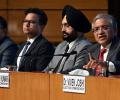
This is the third meeting of CEOs after Gyanesh Kumar took over as the chief election commissioner in February. However, Wednesday's day-long meeting assumes significance as the preparedness of a pan-India SIR are being discussed, officials said.
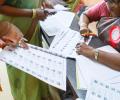
The Election Commission has announced a Special Summary Revision of electoral rolls in 17 states and Union territories, including those facing assembly polls next year. This initiative aims to enrol new voters, correct existing entries, and enhance the accuracy of voter lists, with January 1, 2027, set as the qualifying date.

The Supreme Court has directed an appellate tribunal to expeditiously decide an appeal filed by a 75-year-old advocate challenging the deletion of his name from the West Bengal voters' list following a Special Intensive Revision exercise. The court noted the petitioner appeared to be a bona fide resident and requested a decision within two months.

Uttar Pradesh Police has initiated the process to add Section 198 of the BNS to an FIR against two electoral registration officers and a computer operator in Pilibhit. This action follows alleged irregularities in the voter list of the Pilibhit Sadar Assembly constituency, where an inquiry revealed missing application forms and identical EPIC numbers for different voters. The Election Commission had earlier suspended the officers and directed the addition of the BNS section.
As many as 90,000 electors in Goa have either been found absent, shifted, deceased or possessing duplicate voter cards in the ongoing Special Intensive Revision (SIR) in the state, a senior official said on Sunday.
The Election Commission is ramping up preparations for a special intensive revision of voter lists across India, assessing the progress made on mapping current electors with voters as per the last SIR in different states.

Senior Congress leader Sonia Gandhi has filed a reply in a legal matter concerning her inclusion in the voter list, which is alleged to have occurred before she became an Indian citizen. The case, initiated by Advocate Vikas Tripathi, seeks the registration of an FIR against Gandhi and is currently pending before a sessions court.

A political controversy has erupted over the inclusion of BJP Rajya Sabha MP Raghav Chadha's name in Delhi's electoral rolls. The Aam Aadmi Party (AAP) has alleged procedural irregularities, questioning how his name appeared in the Rajinder Nagar constituency's voter list despite the draft rolls showing fewer entries. Poll officials confirm Chadha's name was added through the updation process after being removed from Punjab's rolls, while Chadha dismisses AAP's claims as a 'bitter ex' reaction.
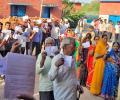
Election Commission officials defend the intensive revision of Bihar's voters' list as 'inclusive' amid criticism from opposition parties, who claim it will disenfranchise voters. The Supreme Court is set to hear petitions challenging the revision.

The Supreme Court has directed the establishment of independent appellate tribunals, led by former high court judges, to address appeals related to voter list exclusions in West Bengal, while also cautioning against undermining judicial officers involved in the process.
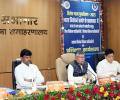
'The Election Commission is conducting the National Register of Citizens in Bihar through the backdoor.'

The Election Commission has revised the schedule for the Special Intensive Revision (SIR) of electoral rolls in Maharashtra, extending the deadline for filing claims and objections and pushing the publication of the final electoral roll to November 4.
Trinamool Congress leader and Member of Parliament Mahua Moitra has moved the Supreme Court challenging an order of the Election Commission of India for special intensive revision of electoral rolls in Bihar.

An independent commission of retired judges has formally requested Uttar Pradesh Chief Minister Yogi Adityanath to furnish supporting data for his statement alleging the exclusion of 1.27 crore Hindus from the state's voters' list, amidst concerns over impending elections.

The Election Commission served a notice to Nobel laureate Amartya Sen regarding electoral roll discrepancies, sparking a political controversy in West Bengal. The Trinamool Congress has criticized the move as a politically motivated attack.

The Supreme Court on Thursday expressed its primary concern for ensuring access for electors whose names were omitted from Delhi's draft voter list during the Special Intensive Revision (SIR) of electoral rolls. The court noted the Election Commission's provision for downloading enumeration forms and will review the matter on December 2, while also seeking details on applications for various voter forms.

According to data released by the ECI, the revised electoral roll has 2,69,53,644 voters, compared to 2,78,50,855 before the Special Intensive Revision began in October last year.

Actor Prakash Raj has claimed his name was deleted from Bengaluru's electoral rolls during the Special Intensive Revision process, affecting 6.5 million voters. He expressed frustration and questioned the ruling dispensation, while reports indicate his name was marked as "permanently shifted" due to a previous case involving multiple voter IDs.

Assam has published its draft electoral roll with 2.52 crore electors, an increase of 2.19 lakh voters since the last revision. The list includes detailed breakdowns by gender, age, and disability, with a period for claims and objections until December 11, and the final list due on January 4 next year. This revision is part of a unique Special Revision process for the state.

Uttar Pradesh Chief Electoral Officer Navdeep Rinwa clarified that the Election Commission's database does not store voter religion information, refuting claims of a conspiracy to target specific communities. This statement comes after Chief Minister Yogi Adityanath's remarks about "missing" Hindu voters and subsequent allegations from the Samajwadi Party. Rinwa explained that any analysis of voter religion by external parties is based on publicly available voter lists and software tools, not EC data.
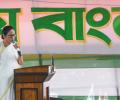
West Bengal Chief Minister Mamata Banerjee has urged voters to cast their ballots in the upcoming assembly polls as a form of 'revenge' for the deletion of names from electoral rolls, alleging foul play and urging vigilance during the election process.

West Bengal Chief Minister Mamata Banerjee has demanded Prime Minister Narendra Modi's resignation, alleging manipulation of voter lists during the Special Intensive Revision (SIR) in West Bengal. She also questioned the abrupt resignation of Governor C V Ananda Bose and accused the BJP of anti-women policies and spreading misinformation.

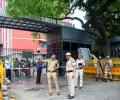
Tension flared outside the Chief Electoral Officer's office in Kolkata following a confrontation between Trinamool Congress supporters and police over alleged voter list manipulation, with accusations of illegal voter enrolment from other states.
The draft electoral roll for Uttar Pradesh was published after a special intensive revision exercise, with 12.55 crore voters retained out of 15.44 crore listed earlier. Around 2.89 crore voters were excluded due to deaths, migration, or multiple registrations.
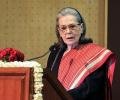
A Delhi court has revived a legal challenge concerning Congress leader Sonia Gandhi's electoral roll inclusion, quashing a magistrate's previous order and mandating a fresh, reasoned hearing on allegations of pre-citizenship voter registration.

'If this is true, the Election Commission should come forward with data and officially confirm it.'

Data reveals that the number of voters in Uttar Pradesh, Uttarakhand, Goa, Punjab, and Manipur has decreased by up to 13.24 per cent following the Special Intensive Revision (SIR) of electoral rolls. Across these five states, the electorate shrank by approximately 2.29 crore, a 12.2 per cent reduction, with Uttar Pradesh accounting for nearly 90 per cent of this drop. These states are slated for assembly polls early next year, and the Election Commission is conducting further revisions to include eligible voters.

The draft electoral roll for Uttar Pradesh, published on Tuesday, includes 13.58 crore voters, marking an increase of over 18 lakh voters since April. The revision, with January 1, 2027, as the qualifying date, aims to include new eligible citizens and remove duplicate or deceased entries. Citizens can submit claims and objections until December 16, with the final roll to be published on January 4, 2027. Special camps and online facilities are available for verification and updates.
The other three crore -- nearly 40 percent -- will have to provide one of the 11 listed documents to establish their place or date of birth.

'I am alive, I have not died. Look, I am standing and speaking,' says Imarti Devi who is listed as deceased and whose name has been deleted from the voter's list. M I Khan reports from Dharaichak, a village in Bihar where 200 voters have been removed from the voter's list.
The Election Commission has launched a special drive to include eligible citizens who were omitted or deleted during the recent Special Investigative Review (SIR) exercise, as well as to register new and young voters. This initiative follows accusations from opposition parties regarding disenfranchisement and aims to ensure no eligible citizen is left out of the electoral process.

The Election Commission of India has published the final voters list for Assam after a Special Revision, deleting over 2.43 lakh names from the draft roll. The final roll comprises nearly 2.49 crore voters, a decrease of 0.97 per cent from the draft roll.

Chief Election Commissioner Gyanesh Kumar expressed satisfaction over the completion of the Special Intensive Revision (SIR) in Bihar, stating that the exercise has 'purified' the voters' list after 22 years. He made the announcement during a press conference in Patna.
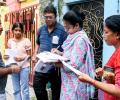
Delhi's Chief Electoral Officer, Ashok Kumar, announced the reverification of over 47 lakh voters whose names were removed from draft electoral rolls. This initiative addresses complaints of eligible voters being omitted and aims to ensure no genuine voter is left out before the final lists are published on December 4. Booth-level officers are resolving discrepancies and voters can fill Form 6 for inclusion.

A panel of retired Supreme Court and High Court judges, part of an Independent Commission on Special Intensive Revision (SIR), held a public hearing on Thursday to address widespread deletions from India's electoral rolls. Testimonies from affected citizens, including a former MP and a Delhi resident declared deceased by the Election Commission, highlighted significant issues. The SIR process, initiated in 2025, has led to the removal of approximately 13 crore voters nationwide, with substantial deletions reported in Delhi and Uttar Pradesh.
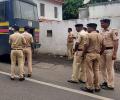
A political controversy has erupted in Navi Mumbai after thousands of SIR forms, used for voter list revision, were allegedly found at a photocopy shop. This led to a clash between Shiv Sena (UBT) and BJP activists, with allegations of voter list manipulation and questions raised about the transparency of the electoral process.

The Bombay High Court's Goa bench has ruled that draft electoral rolls cannot be the sole basis for deleting names from voter lists, asserting that administrative software cannot supersede statutory laws. The court questioned the Election Commission of India's authority to delete voters without a hearing, highlighting concerns over the ERONET system's limitations and its potential to disenfranchise citizens.

The Election Commission has informed the Supreme Court that voters previously enrolled but missing from draft electoral rolls can re-apply via Form 6 without facing prosecution. This clarification aims to allay fears and ensure eligible citizens are not deprived of their right to vote, while also addressing concerns about Absent, Shifted, Dead, or Duplicate (ASDD) voters.

The Election Commission of India has introduced new restrictions on the number of Form 7 applications an individual can submit, both online and offline. This move aims to prevent bulk or malicious attempts to remove legitimate voters from electoral rolls and streamline the objection process, especially after reports from states like Karnataka and Odisha.
